From Managing People to Leading the Future
Continuous learning transforms HR into a strategic business partner
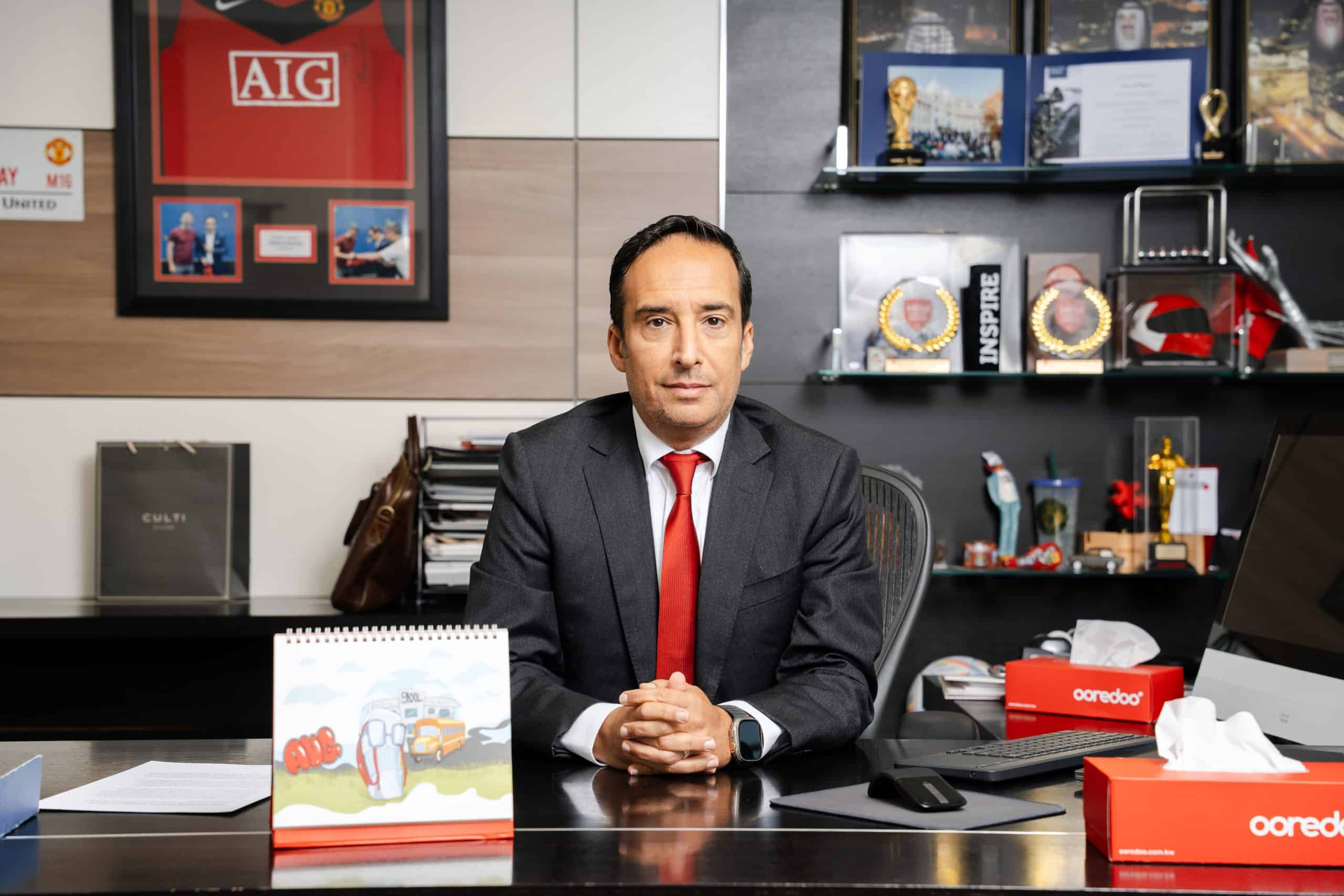
When Omar Al Bassam returned to Kuwait after graduating from the University of Portsmouth in 1999, he had no grand plan to build a career in human resources. He joined M.H. Alshaya, one of the Middle East’s largest retail franchise operators, through its HR Management Trainee Program almost by chance, expecting little more than an opportunity to begin his professional life. Nearly three decades of progressive HR leadership experience across Retail, Banking, Aviation, and Telecommunications. He currently serves as Chief Human Resources & Administration Services Officer at Ooredoo Kuwait.
In retrospect, he sees that unexpected first step as the beginning of a much broader journey. “I understood that HR isn’t only about policies or hiring people,” he says. “It’s also about enabling business success.”
In those early years, Al Bassam immersed himself in the fundamentals of the profession, determined to understand every aspect of labor law, recruitment, HR operations and people management. Yet the longer he worked, the more his perspective evolved. Human resources, he realized, was far more than a support function operating behind the scenes. At its best, it became a strategic partner capable of helping organizations solve business challenges through their people rather than simply managing them.
That shift in perspective became unmistakable around nine years ago when he joined Ooredoo Kuwait’s Executive Leadership team as Chief Human Resources & Administration Services Officer. Sitting alongside the CEO and the rest of the Executive Committee fundamentally changed the way he viewed his own role. “I realized that I was no longer simply solving HR or people problems,” he says. “I was helping solve business problems through people.”
Executive education played an important role in preparing him for that transition. Throughout his executive career, Al Bassam completed a series of KFAS-supported programs at some of the world’s leading business schools, including London Business School, Harvard Business School and Imperial College Business School. KFAS facilitated the application process, but admission itself remained highly competitive, with participants selected directly by the universities.
“My first London Business School program was in 2010,” he recalls. “The Harvard Business School program in 2015–2016 played a major role because, in 2017, I was appointed as a Chief Human Resources & Administration Services Officer. The six-month program gave me many of the skills that helped prepare me for that position.”
His learning priorities changed as his career progressed. Earlier in his executive journey, he deliberately invested in strengthening his leadership capabilities. Once those foundations had been established, he shifted his focus towards technology, organizational transformation and the future of work, recognizing that leadership itself requires constant reinvention.
“I’ve already invested heavily in leadership. Now let me focus on different areas,” he explains it. Then he adds, “You have to keep learning. The workforce changes. The business environment changes. The world changes. If you don’t stay on top of those changes, you’ll become outdated.”
For Al Bassam, those programs were never really about adding prestigious names to his résumé. Their value lay in acquiring ideas and practical tools that could immediately be applied back home. Harvard, in particular, left a lasting impression—not only because of what it taught him, but because of the intensity of the experience itself. Participants travelled to Boston twice during the six-month program, spending weeks living on campus and immersing themselves in case discussions, team projects and classroom debates. Days began at seven in the morning with breakfast meetings before classes started and often continued well into the evening as teams worked through business cases together. “It was constant,” he recalls. “If someone slacked off or didn’t do the work, they were confronted immediately. People would say, ‘You’re not here to waste time.’”
The classroom, however, was only part of the experience. Just as valuable were the relationships forged with executives from around the world—connections that have endured for well over a decade. “I know people in Brazil whom I met in 2010,” he says. “I know people across Europe, China, Korea and many other places. Those relationships have stayed with me.”
That international outlook has proved especially valuable at Ooredoo, whose operations extend across Kuwait, Qatar, Oman, Iraq, Algeria, Tunisia Palestine, Maldives and Indonesia. Working within a multinational telecommunications group has also reinforced another lesson: technological change never stands still. “Technology will always continue to evolve,” he says. “We had 4G, then 5G, now 5G+, and we’re already talking about 6G.” The implications, he believes, extend far beyond faster internet speeds. “Imagine you’re sitting in San Diego and, through high-speed internet and robotics, you’re able to perform surgery on someone in Kuwait.”
Yet despite the rapid pace of innovation, he believes the greatest challenge remains human rather than technological. Organizations must equip people with the confidence and skills to embrace new technologies rather than fear them. “We need to improve their technological literacy and reassure them that AI itself will not replace them,” he says. “AI won’t replace someone who is willing to learn, willing to explore and willing to adapt.”
For Al Bassam, HR begins long before an employee walks through the office door. It starts with the very first conversation with a candidate and continues through recruitment, onboarding, mentoring during the first hundred days, development planning, performance reviews, career progression, succession planning and, eventually, even an employee’s departure from the organization. Every stage, he believes, is part of the same continuous journey.
Among the initiatives he is most proud of is Ooredoo Kuwait’s approach to succession planning. Today, five of the company’s six C-suite Executives—including Al Bassam himself—were promoted internally, reflecting years of deliberate investment in developing future leaders.
Another initiative reflects a different side of organizational culture. Around six years ago, Ooredoo introduced birthday leave, giving employees a paid day off to celebrate with family and friends. “On your birthday, don’t come to work,” he says. “Stay with your family. Stay with your friends. Celebrate. The day is on us.”
Those values were tested most visibly during the COVID-19 pandemic. When Kuwait closed its borders, many employees found themselves stranded overseas while on annual leave. Rather than placing them on unpaid leave until they could return, Ooredoo continued paying their salaries. “It demonstrated to our employees that we were committed to them,” Al Bassam says. The decision had a lasting impact on trust within the organization. Employees witnessed first-hand how the company supported them during the crisis; this increased employee loyalty significantly, with around 80 percent of employees becoming promoters of the organization in Ooredoo’s internal Net Promoter Score survey.
Undoubtedly, the lessons Al Bassam absorbed through executive education have also shaped the way he leads his own team. Around 2015, he established what he calls his “consultancy board”—his senior HR leadership team. Rather than making major decisions alone, he deliberately brings them into the discussion, encouraging debate and shared ownership. “When people contribute to a decision, they become committed to making it succeed,” he explains. The same philosophy underpins his succession planning. Whenever he is away from the office, he rotates leadership responsibilities between two potential successors rather than relying on a single deputy. “ I never want to rely on just one person.” Some leaders hesitate to prepare future successors because they worry about eventually being replaced. Not Al Bassam. “I do not see it that way. I believe your success is ultimately a reflection of the strength and performance of our team”.
That belief also shapes his day-to-day interactions with managers. These days, when a manager walks into his office with a problem, Al Bassam rarely reaches for the answer. Instead, he reaches for another question, nudging people to analyze the situation, weigh their options and arrive at their own conclusions. “What do you think? What options have you considered? What would you recommend?” For Al Bassam, developing leaders means resisting the temptation to provide every answer yourself. “If I simply give them the answer every time, they won’t grow,” he says. At the end, his goal isn’t to build followers who depend on him, but leaders who no longer need him.