When Courage Changes the Course
A Career Change Took Her from Numbers to Empowering People’s Growth
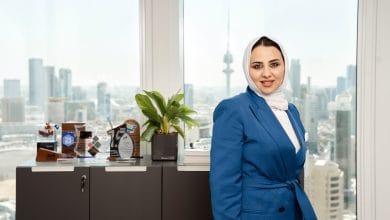
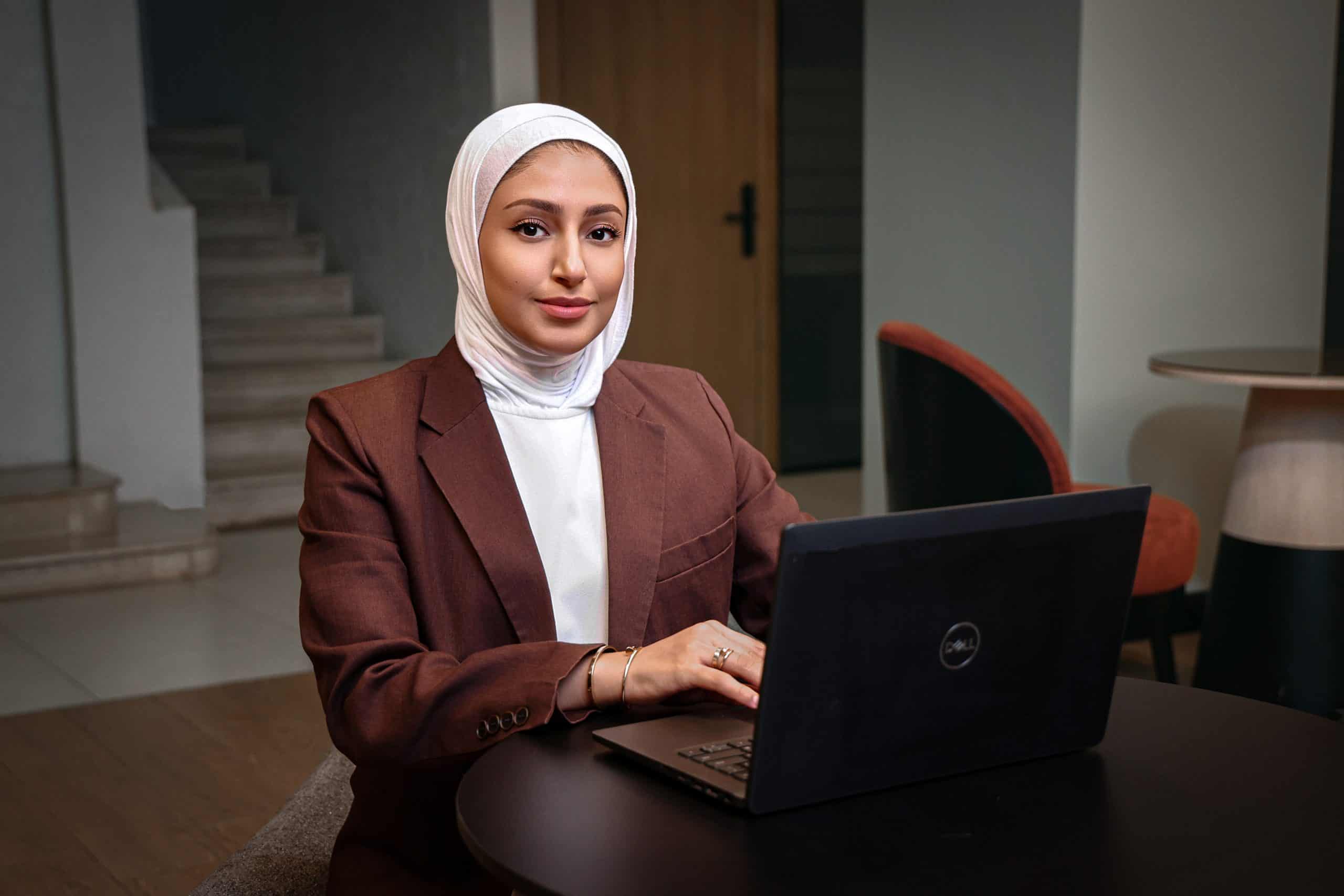
When telecommunications company stc’s Chief Human Resources Officer suggested Sarah Al-Khamees might belong in Human Resources, she was stunned. After earning a bachelor’s degree in Accounting with a minor in Finance from Kuwait University, she began her career as an accountant before joining stc as an Investor Relations Junior Analyst, where she coordinated financial disclosures, annual reports, and communications with stakeholders. Everything about her education and professional experience pointed in the same direction. Human Resources simply was not part of the plan. “I’ve spent my whole career in finance,” she remembers telling him. In hindsight, she describes what happened next as “the biggest turning point” of her career. “I think many people find that transition surprising, and maybe even a little interesting,” she says.
There is a backstory to making that decision, however, and it began months earlier, through a Kuwait Foundation for the Advancement of Sciences (KFAS)-supported Innovation Challenge. In 2024, Al-Khamees was one of only five stc employees nominated to participate in the Innovation Challenge at IE University in Madrid. The three-month program brought together professionals from different industries—including telecommunications, banking, and oil and gas—to develop innovative solutions to real-world problems. Each month included several days of activities before participants traveled to Madrid for the program’s final module.
Before attending, she says she was always confident in the quality of her work. She trusted the work she produced. What she found much harder was speaking up. She tended to stay quiet until she felt completely prepared and she was more comfortable listening than voicing her own ideas, particularly when senior leaders were in the room. After returning from Madrid, that changed. “I found myself participating much more actively in discussions at work,” she says. “Previously, I would have listened more than I spoke. Now, I contribute my own ideas and perspectives.” She noticed the difference most clearly when speaking with senior executives. “In corporate environments, there are always hierarchies,” she says. “When you’re young, you sometimes hesitate to speak directly with senior executives.” After the program, she found herself speaking confidently even in the presence of the company’s CEO. “My confidence had grown tremendously.”
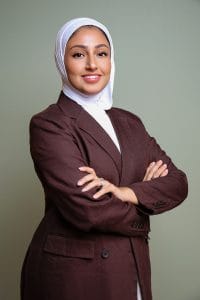
Asked what made the biggest difference, she points not only to the classroom, but also to the experience of taking her first independent journey outside Kuwait. Before Madrid, she had never traveled abroad alone. “I had always traveled with my family,” she says. Traveling independently, meeting people from different companies, and adapting to a completely different environment all helped strengthen her self-belief. Just as importantly, working alongside professionals from different industries changed the way she approached problems. “You realize that everyone approaches problems differently,” she says. “There isn’t just one correct answer.”
The program also reshaped the way she thought about innovation. Before attending, innovation largely meant technology. Today, she sees it differently. “The real question is whether you’re solving a genuine problem,” she says. “Sometimes the solution is technological. Sometimes it isn’t.” During the program, participants repeatedly returned to one principle: understand the problem before trying to design the solution. That lesson continues to shape her work today.
Not long after returning to Kuwait, another unexpected opportunity emerged. As she began speaking more confidently with senior leaders across the company, one conversation with the Chief Human Resources Officer took her career in an entirely new direction. He asked her what she enjoyed most about her work. Eventually, he said, “I actually think you’d fit HR.” At first, she was stunned. But he suggested she should spend time shadowing different HR departments before making up her mind. She visited several teams, observed how they worked, and spoke with managers across the function. It was then that she realized how broad Human Resources actually is. “It isn’t mostly recruitment,” she says. “It includes leadership development, organizational development, learning, succession planning, and many other areas.” Little by little, she realized talent development suited her personality far more than finance. “I enjoy helping people grow,” she says. “That’s what gives me energy.”
She describes that period with a metaphor that still makes her smile. “I felt like a bee moving from flower to flower.” Moving between departments, speaking with different people, and learning something new everywhere she went never felt confusing. Every conversation offered another perspective until she eventually found the place where she felt she belonged.
Today, she still draws on many of those lessons. Innovation, she believes, also applies to the way organizations help people learn. “Every employee learns differently,” she says. “Not everyone enjoys traditional classroom training. Some people prefer workshops. others learn through coaching. and others need practical experience. The goal isn’t simply to organize training sessions. The goal is to create real development.”
AI has become one of the tools she uses in that work. She leverages AI to brainstorm ideas, organize information, and structure her thinking, but she does not believe it can replace the essence of Human Resources. “Human Resources is fundamentally about people,” she says. Communication, empathy, listening, and building trust, she believes, are the skills that will continue to matter.
Looking back, Al-Khamees says the achievement that makes her proudest is not a promotion. It is having the courage to change careers. “I think many people stay in careers that don’t really fit them because they’re afraid of change,” she says. “For me, making that transition required courage.” Today, she knows she made the right decision. “Helping people grow gives me much more satisfaction than working only with numbers.”
Her advice to young Kuwaitis considering a KFAS program reflects her own experience: don’t wait until you think you’re ready. “These programs are built to unlock your full potential.” she says. “They expose you to different ways of thinking. They introduce you to people from different backgrounds. And they challenge you to step out of your comfort zone.” When asked what she ultimately brought home from Madrid, her answer came immediately. “To speak up. To share my ideas. To believe that my perspective has value.” The confidence she found there would shape far more than her career.