
When rockets started falling within range of Kuwait at the start of the Iran war in February 2026, the government made an urgent decision: children would no longer go to school in person. Overnight, the country's entire public education system moved online – just as it had years earlier during the COVID-19 pandemic.
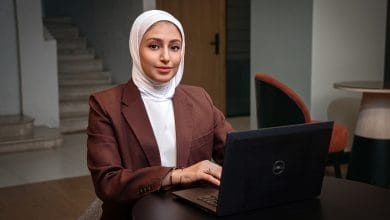
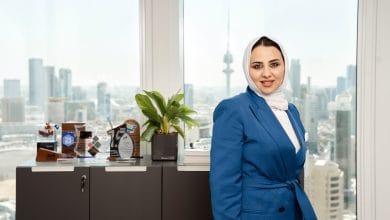
What happened next didn’t surprise Ayeshah Ahmed Alazmi, an associate professor of educational administration at Kuwait University. The teachers, she said, rose to the occasion. They began organizing informal training sessions and devising new ways to reach their students. They were improvising and thriving, much as they had during the pandemic, when Alazmi watched teachers seize “the leader's opportunity."
Alazmi studies educational leadership, law, and policy — work that has earned her a 2025 Jaber Al-Ahmad Prize for Young Researchers — but she also draws on a more direct source of knowledge: her own years in the classroom. Education runs in her family – her mother was a school principal – and after earning a B.A. in Education from Kuwait University, Alazmi spent six years teaching high school biology and chemistry before pursuing a master's degree in education administration.
While doing so, a mentor and inspire— Professor Abdulmuhsen Ayedh Al-Qahtani — encouraged her to pursue a doctoral program in the United States focused on a field that barely existed in the Middle East at the time: educational law. Alazmi enrolled at Virginia Tech under David Alexander, among the world's leading authorities on the subject. "My degree was the first Ph.D. in the Middle East related to school law," Alazmi said.
She came home to a system in need of new thinking. Kuwait spent roughly 10 to 12% of its national income on education — a share that exceeded that in many other nations, said Alazmi. Yet Kuwaiti students have long underperformed their peers in other Gulf states in subjects like math and science, and many struggle with reading comprehension even in the upper grades.
Multiple reforms have been tried and abandoned. In recent years, growing numbers of Kuwaiti parents have turned to private schools instead. Twenty years ago, only about 10% of Kuwaiti children attended private schools, Alazmi noted. Today that figure had Increased. The main draw, she said, was language: private schools teach primarily in English, and parents want their children to emerge fluent. Alazmi has children in both systems for that very reason. Her older kids, who were with her in the USA, returned to Kuwait struggling with Arabic. They now attend private institutions, while her younger children are in public school.
Beyond language, private schools also shine in what Alazmi sees as Kuwait’s public schools’ one central weakness: an almost exclusive reliance on exams that reward rote memorization over understanding. As a result, experts have found, students who may sail through primary and high school with strong grades may still struggle when they reach university, having never developed the comprehension, analytical, and independent reasoning skills that higher education demands. In private schools, a student's grades are built largely from projects, assignments, and presentations — work that requires sustained thinking and self-expression. “Only 20%, or sometimes 30%, of their grade depends on tests,” Alazmi said.
That exam culture is an outgrowth of the very structure Alazmi studied during her pioneering doctorate: Kuwait’s education law concentrates authority at the top, with the Ministry of Education controlling curricula, teacher evaluation, and school budgets, leaving principals with limited room to maneuver and teachers with even less. "We have very little space to control our system within the school," Alazmi said. She is convinced that giving teachers more say over how they run their classrooms would significantly strengthen Kuwait's public schools. “Teachers are the main core of education," she said. "Building their leadership skills will affect the entire system."That exam culture is an outgrowth of the very structure Alazmi studied during her pioneering doctorate: Kuwait’s education law concentrates authority at the top, with the Ministry of Education controlling curricula, teacher evaluation, and school budgets, leaving principals with limited room to maneuver and teachers with even less. "We have very little space to control our system within the school," Alazmi said. She is convinced that giving teachers more say over how they run their classrooms would significantly strengthen Kuwait's public schools. “Teachers are the main core of education," she said. "Building their leadership skills will affect the entire system."
Paradoxically, the Iran war and its threat of rocket fire have already brought teachers some of the freedoms Alazmi believes are needed. Released from the confines of their physical classrooms – and some of the rules that came with them – Kuwaiti teachers began to experiment with pedagogy. Many built more collaborative learning environments. Some started making videos; others leaned into AI tools or invented songs to help students absorb language lessons.
Alazmi watched the effects at home, where her children were learning to build presentations, create digital content and use online platforms — none of it part of the standard curriculum. "Our kids now learn more skills than before," she said. “What's happening now and what happened during COVID-19 gives us signs that our teachers are capable of being very good leaders.”
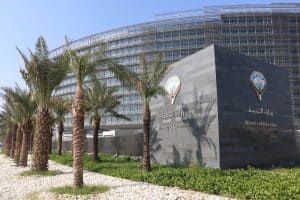
Alazmi is now optimistic about the future of public education in Kuwait. For most of her career, the system has seemed unstable — Kuwait's education ministry changed hands six times in a single decade, each new minister arriving with a fresh vision, then departing before it could take root. There were stretches, she recalled, when “we used to change our minister every six months.” Now it feels different. The country has a new president and, with him, a Minister of Education whom Alazmi described as clear-eyed and serious and who has laid out a concrete agenda: modernizing curricula, introducing competency-based learning, and strengthening school leadership. These are central pillars of Kuwait’s Vision 2035, the country's long-term development roadmap, which has set improving education quality as one of its core goals.
Recently, the Minister of Education has invited Alazmi to discuss her work. She has come away feeling heard. "My research is taken and discussed," she said. She sees good decisions being made, and it inspires her: "I will work harder for my country Kuwait."