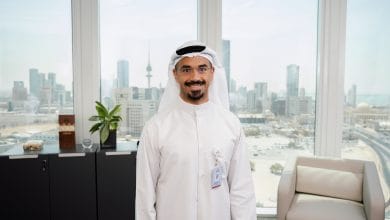

When Professor Jalal Shatah was in first grade, a worried teacher pulled his mother aside at a parent-teacher conference. She had taught all four of Professor Shatah’s siblings and feared that Jalal — the youngest — would not match the others academically. In particular, the teacher felt, Jalal would not be good at math. “My mother was upset,” Professor Shatah said.
He recalled the story with a twinkle in his eyes, sitting in his office at the Courant Institute of Mathematical Sciences at New York University.
The Courant is widely regarded as one of the world’s top mathematics centers, and Professor Shatah has worked there for more than four decades as a leading authority on wave turbulence and nonlinear partial differential equations — advanced mathematical formulas used to describe how complex waves and motions evolve over space and time. His foundational contributions to mathematics earned him a 2025 Kuwait Prize.
The passion for mathematics gripped Professor Shatah about two years after that parent-teacher conference. In third grade, he realized the subject always had exactly one right answer. Other subjects at school often felt subjective to him — open to interpretation, endlessly arguable. Mathematics was not. “I love ordering things, I don’t like uncertainty,” Professor Shatah said. To the young Jalal, math’s precision felt like solid ground.
After high school, he wanted to study mathematics, but his family pushed him toward a more practical field with steadier job prospects. It was the mid-1970s, during the Middle East oil boom, and Professor Shatah applied for a spot in engineering at the American University of Beirut. Then the civil war broke out, and he fled. He found himself a refugee in the United States, studying electrical engineering at the University of Texas at Austin. “But math kept pulling me in,” he recalled. “I could not stand not doing math.” He added a second major to his studies. “Engineering to satisfy the family and math to satisfy myself,” he said. To save money, he finished both degrees in just three years.
He rose through the faculty ranks, served as Chair of the mathematics department, Deputy director of the institute, and in 2019 earned the Silver Chair in Mathematics; one of New York University’s highest academic honors
A scholarship took him to Brown University in Providence, Rhode Island, where he earned a master’s degree in applied mathematics in 1981 and a doctorate in 1983. Then came a postdoctoral position at the Courant Institute in New York City, an institution with almost mythological appeal for Professor Shatah. It was founded by Richard Courant, a German Jewish mathematician who trained under David Hilbert in Göttingen — one of history’s great centers of mathematical thought — before fleeing Nazi Germany and rebuilding that tradition in New York. “It was my dream to come here,” Professor Shatah said. The first time he walked through the doors, he declared: “I’m not leaving this place for the rest of my life.” That was 43 years ago. Over those years, he rose through the faculty ranks, served as chair of the mathematics department and as deputy director of the institute, and in 2019 earned the Silver Chair in Mathematics, one of New York University’s highest academic honors.
During his electrical engineering studies, Professor Shatah had become familiar with electromagnetic waves and, through them, Fourier analysis — the mathematical technique for decomposing complex signals into their component frequencies. He found it captivating. When he turned to mathematics as a discipline, he kept studying waves across different fields, including plasma physics and fluid dynamics. A central focus has been to understand how waves interact when they don't simply add up neatly but push and pull on one another — canceling each other out or reinforcing each other, the way a push at just the right moment sends a child on a swing soaring, while a poorly timed push barely moves them. Mathematicians call these moments of perfect timing resonances, and understanding how they arise and how they shape waves over time, is, Professor Shatah said, "probably the thing I am best known for in my work." Although his contributions to nonlinear wave theory range considerably wider, from questions of when waves remain stable, to whether equations describing them can be solved cleanly, to the geometry of surface waves.
Ocean waves, in particular, have drawn much of his attention in recent years. To most people, the ocean looks like pure disorder, with waves churning and crossing in every direction. Professor Shatah sees something entirely different. "It's very funny because many people think, oh, you work in turbulence and chaotic behavior. This is uncertainty. No, no, no," he said. "I look at these waves and I say: the waves are not interacting randomly. They are interacting because of arithmetic."
This strand of his work connects directly to pressing questions in climate science. In the ocean, internal waves — slow-moving formations that can be hundreds of kilometers long and travel through the ocean’s depths — play a crucial role in mixing water masses. They also carry trillions of watts of energy across vast distances, shaping how the ocean distributes heat around the planet. But no climate model can yet directly capture these processes. One of Professor Shatah’s goals has been to explain how the statistical patterns observed in the ocean emerge from the underlying wave dynamics.
A central focus has been to understand how waves interact when they don’t simply add up neatly but push and pull on one another
He is awed by how mathematics can build bridges across cultures and centuries. At some point, he looked up what he called his “mathematical genealogy” — the chains of teachers and students stretching back across the centuries that link his work to scholars of the distant past. "The fact that I can relate what I'm doing right now to things that have been going on for 5,000 years — this continuity is, for me, an amazing feeling. I'm connected to Bukhari, I'm connected to Ibn Yunus," he said, naming Islamic mathematicians who studied harmonics nearly 1,000 years ago. That the Kuwait Prize comes from the region he grew up in, and from the same part of the world as the mathematicians in his own genealogy, makes the recognition especially resonant. "After 900 years or so, to be coming back full circle," he said, "it is very meaningful to me."
As for the first-grade teacher who was so worried about him? Professor Shatah said she became one of his biggest fans.