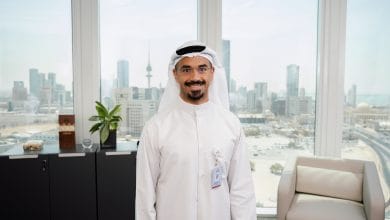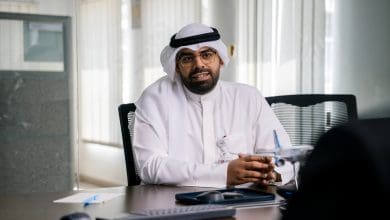

Dr. Abdulhameed Abdal created electronics that can bend, stretch, and conform to the body like a second skin
Profile Dr. Abdulhameed Abdal
Affiliations:
- Department of Mechanical & Aerospace Engineering, University of California, San Diego (UCSD)
- Department of Biomedical & Instrumentation Engineering, Abdullah Al Salem University
Program/ Award:
KFAS Scholarship/Bridging (PhD), granted 2021; PhD extension to Spring 2023
Publication Grants:
Multiple approved Q1 publications under KFAS “Scholarly Publication Award” (e.g., Cell Reports Physical Science, ACS Materials Letters, Advanced Healthcare Materials)
Researcher Highlights
Dr. Abdulhameed Abdal’s work sits at the intersection of materials science, electronics, and human-centred biomedical design.
His research explores how advanced conductive polymers, flexible substrates, and stretchable electronic architectures can be transformed into next-generation tools for health monitoring and scientific discovery.
Through his contributions at both the University of California, San Diego and Abdullah Al Salem University, he has helped advance the development of ultrathin, skin-compatible devices and sensor systems designed to integrate seamlessly with the human body.
His publications in leading Q1 journals highlight his role in pushing the limits of functional materials and wearable technologies toward more precise, comfortable, and high-performance biomedical applications.
He has extensive Q1/Q2 publication record in advanced materials, neural interfaces & biomedical engineering (npj Flexible Electronics, Cell Reports Physical Science, ACS Materials Letters, Advanced Healthcare Materials)
In addition, he has research contributions in wearable electronics, implantable neural interfaces, and conductive polymer systems. Also, Dr Abdal has co-investigator collaborations with top institutions (UCSD, CMU, UT Austin, UCL).
Introduction
About one in 26 people will develop epilepsy in their lifetime. Many of them will not be able to get adequate treatment for a shockingly basic reason: the diagnosis requires expensive, cumbersome brain monitoring that keeps patients tethered to machines in hospitals for days.
In a highly developed country like the United States, a four- to five-day study in a hospital monitoring unit costs between $40,000 and $50,000. Patients must have electrodes glued to their scalps, restricting their mobility while nurses constantly check that the connections hold.
In less developed countries, such monitoring infrastructure is often entirely lacking, leaving patients without proper diagnosis or treatment.
Now, there may be a solution lurking on the horizon. Abdulhameed Abdal, who recently joined Abdullah Al Salem University as an assistant professor, has developed a device that could revolutionize how doctors monitor brain activity in epilepsy patients. Called NeuroWeaves, the invention is one of two breakthroughs from Abdal’s doctoral research in mechanical engineering at the University of California, San Diego — both aimed at making electronics feel less like machines and more like part of the body itself.
With funding from the Kuwait Foundation for the Advancement of Sciences (KFAS), the electronics Abdal created for his thesis bend, stretch, and conform to the body like a second skin and can read electrical signals from the brain or transmit realistic touch sensations. Together, these innovations could potentially transform fields from epilepsy diagnosis to robotic surgery and prosthetic limbs.
Resembling a bendable wire, the thread can be sutured directly into the scalp. «It takes just minutes,» said Dr. Abdal, noting that any doctor anywhere could perform the procedure with only local anesthesia and no special training.
A Simpler Path to Diagnosis

Up to 70% of people living with epilepsy could be seizure-free if they received proper diagnosis and treatment, according to the World Health Organization. Seeking to free patients from the hospital-bound diagnostic EEG, doctors have recently experimented with implanting electrodes directly beneath the scalp. But these devices bring their own burdens: doctors must cut into the scalp and carefully tunnel under it to push the sensor into place. Patients underwent general anesthesia for this procedure and could be left with headaches and bleeding, said Abdal. Furthermore, each device can monitor only a small portion of the brain.
Patients underwent general anesthesia for this procedure and could be left with headaches and bleeding, said Abdal. Furthermore, each device can monitor only a small portion of the brain.
Abdal’s solution draws on something far more familiar: the simple suture. He developed extremely thin gold wires — just 45 micrometres in diameter, roughly the width of a human hair — coated with a conductive polymer, that is, a plastic-like material that nevertheless possesses the electrical properties of a metal and can pick up the brain’s faint electrical signals.
Resembling a bendable wire, the thread can be sutured directly into the scalp. “It takes just minutes,” said Abdal, noting that any doctor anywhere could perform the procedure with only local anesthesia and no special training. The patient then goes home wearing a small wireless module behind the ear, similar to the cochlear implant some deaf people use. The wire streams brain activity continuously, with the module recording for around eight hours per battery charge. Doctors can position multiple threads across the scalp to triangulate where seizures originate.
Beyond improving diagnosis for the 50 million people worldwide who live with epilepsy, NeuroWeaves could also help clinicians study health conditions such as sleep disorders, depression, Parkinson’s, and traumatic brain injuries, said Abdal. In short, anywhere doctors need a sustained, unobtrusive window into the brain.
Wired for Touch
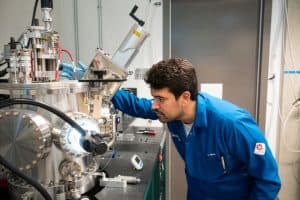
While NeuroWeaves measures signals from the body, Abdal also tackled the opposite challenge in his doctoral research: how to send touch sensations back to the skin.
Most devices that try to recreate touch rely on mechanical motors: the buzz of a phone, the rumble of a game controller. Apple Watches, for example, “are never going to go thinner than they are” now, said Abdal. This is because each contains a vibrating motor, and shrinking it means weakening the buzz it produces.
Touch can also be simulated by electrical stimulation. However, existing approaches tend to cause pain. Traditionally, electrodes are made from metal, which is often too rigid to sit flat against the skin, particularly when the wearer moves. As gaps formed between the skin and the electrode, a charge built up until the wearer got zapped by an electrical shock, said Abdal.
Working in the lab of Darren Lipomi, then a professor in UC San Diego’s Department of NanoEngineering, Abdal helped develop a new polymer. Conductive like a metal but stretchy-soft like skin, it laminates snugly against the body, eliminating gaps. Worn wrapped around the fingertip or like a sticker on the forearm, the patch works by stimulating the nerve fibers in the skin that respond to pressure and vibration, using currents as low as six microamperes — about one‑hundred‑thousandth of the current running through a household light bulb.
The technology could help restore touch sensation to prosthetic limbs for amputees, enabling them to feel objects they grasp. It could also transform how blind people read Braille: rather than running a finger across a display of raised pins, a reader wearing a polymer patch on their fingertip could glide it across a flat screen, feeling each dot as a brief electrical pulse against their skin. Virtual reality games could create realistic touch sensations beyond simple vibration.
Dr. Abdal sees surgical training as a particularly promising near-term application. The devices could enable surgeons operating remotely to feel when they've touched soft tissue rather than firm structures, helping them work more precisely.
The KFAS Difference
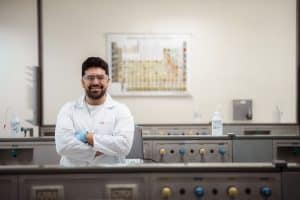
Neither project would have been possible without KFAS support, Abdal stressed. When he arrived as a first-year PhD student, no American institution was funding either idea. KFAS backing allowed him to pursue them from scratch, leading to early results that then attracted further American funding and collaborations.
Researchers have already pilot-tested the touch-simulating patches in humans, and Abdal sees surgical training as a particularly promising near-term application. The devices could enable surgeons operating remotely to feel when they’ve touched soft tissue rather than firm structures, helping them work more precisely.
NeuroWeaves, meanwhile, is moving toward commercialization but Abdal is already thinking further ahead: rather than suturing the thread into the scalp, he speculates that the thread could one day be mixed with saline and delivered with a single injection. Getting patients wired up for brain monitoring — a process that now means days in a hospital — would then only take seconds.